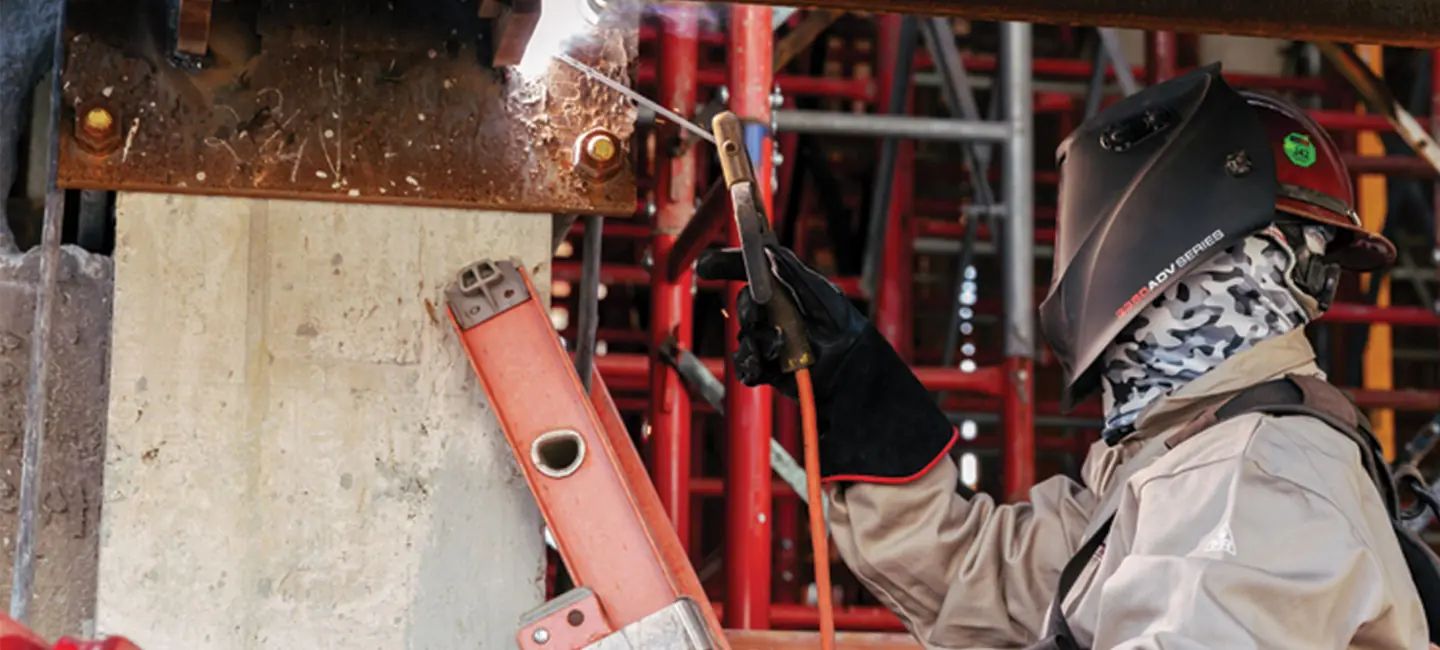

Closed space changes the exposure
Welding fume contains metal particles and process gases that vary with the base metal, filler, coating and process. OSHA lists gases such as carbon monoxide, nitrogen dioxide, ozone and carbon dioxide among welding process hazards. The smaller the space and the poorer the air movement, the faster an exposure can build.
Visible smoke is not a complete warning. Carbon monoxide has no reliable warning by smell, and other gases can reach harmful levels before the room feels obviously unusable. A quick weld in a sealed garage can still expose the welder and anyone nearby.
Use two layers of air control
Open the garage door to provide fresh-air exchange and use local exhaust to remove fume near the arc before it reaches the breathing zone. Place the extraction hood, nozzle or portable exhaust close to the plume, but keep the exhausted air from being directed toward another person or back into the house.
A box fan at the open door can improve general air movement but is not a substitute for placing extraction near the source. More open space does not guarantee adequate ventilation, especially when wind or building layout pushes fume back toward the welder.
Treat coatings and confined areas as extra hazards
Paint, solvent residue, plating and galvanized coatings can create additional toxic fume when heated. Clean surfaces according to the material and process instructions, and do not weld unknown coatings without understanding the hazard and controls.
Do not weld inside a tank, drum, vehicle interior, pit or other confined space without a proper confined-space and respiratory plan. Shielding gases can displace oxygen. For a home garage, keep the work in an open, ventilated area and stop if the space stops behaving like one.
Have a response plan
Keep other people, pets and children out of the welding area. If anyone develops dizziness, nausea, eye or throat irritation or breathing difficulty, leave the area, get fresh air and seek medical advice. Do not return until the source and exposure are understood.
Create a fire watch and extinguishing plan before welding. Move flammable material away, cover surfaces that cannot be moved, and stay alert after the arc stops because sparks can smolder. Ventilation does not replace fire prevention.