
Start with the VEVOR model, not the VEVOR logo
VEVOR's welding catalog contains machines with very different jobs. A 130A gasless box, a dual-voltage four-in-one and an AC/DC TIG unit do not belong in the same bucket just because they share a brand. The first check is still the outlet, followed by the metal, the process and the accessories.
The product pages give each model a clear starting point, but the exact manual controls input current, duty cycle and included equipment. Confirm the regional listing rather than relying on a model name alone.
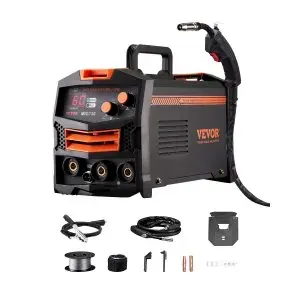
The 130A MIG is the gasless value route
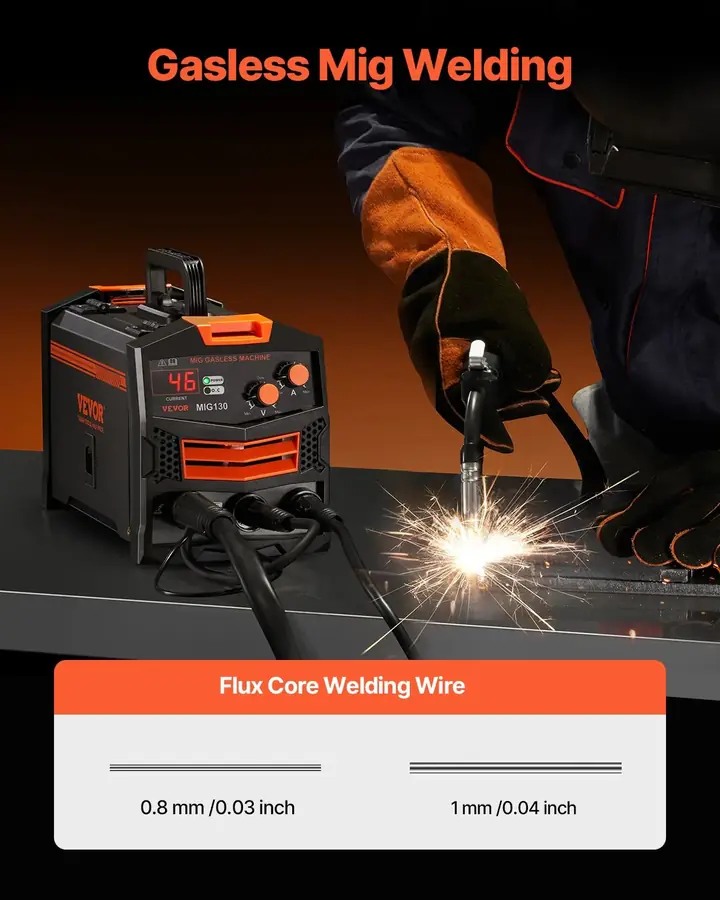
The VEVOR MIG 130 is a 110V gasless flux-core machine aimed at light steel work. It is the simplest and least expensive VEVOR path in this shortlist. That makes it relevant for a buyer who wants to practice on brackets, stands and small repairs without managing a shielding-gas cylinder.
Its scope is intentionally narrow. It is not the right choice for aluminum, clean gas-MIG bodywork or regular 1/4-inch fabrication. The 130A model name also does not establish the machine's comfortable duty cycle or the circuit demand at every setting.
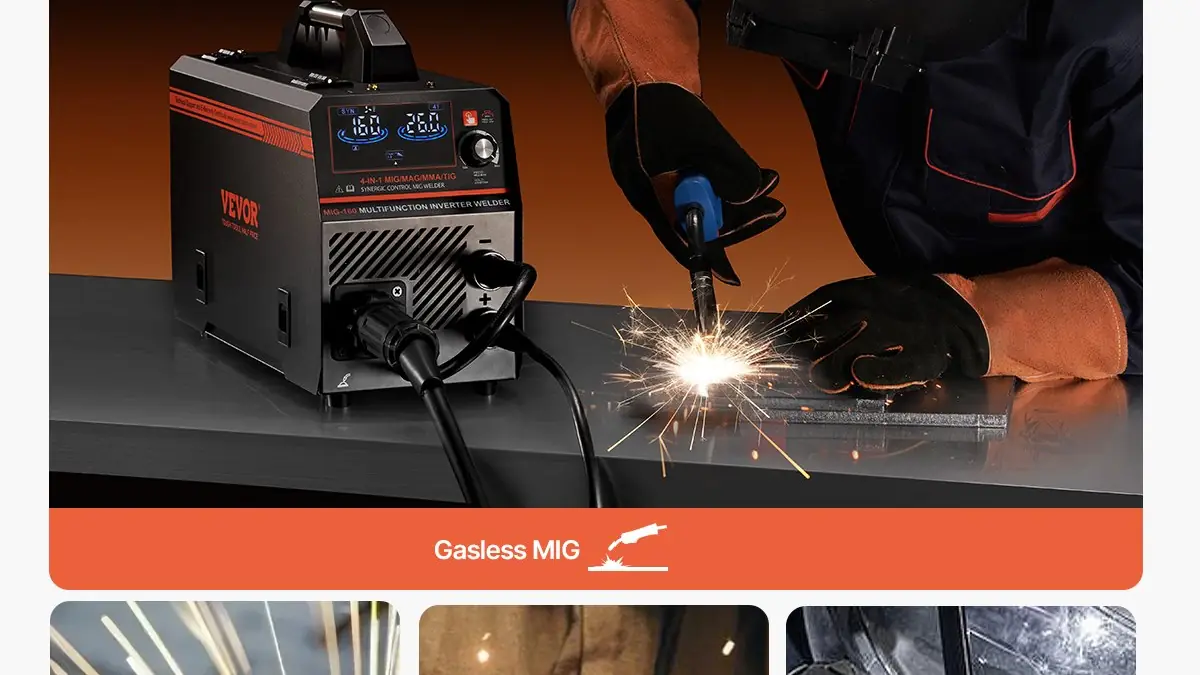
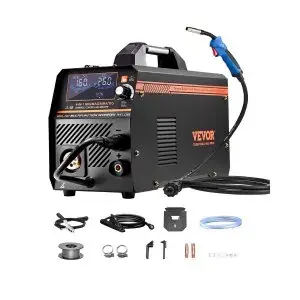
The 160A four-in-one is the useful middle
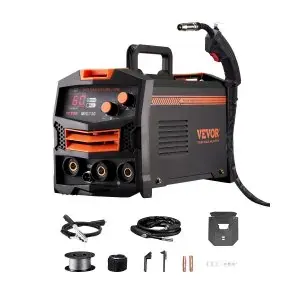
The 160A machine adds gas MIG, flux-core, stick and lift TIG with a 110V/220V input. This is the VEVOR recommendation most likely to make sense for a garage that will grow into more varied projects. It covers a broader process range without jumping straight into premium professional pricing.
The gas route introduces a cylinder, regulator, hose and ventilation decisions. The 220V side can deliver more than the 120V side, but the manual's input and duty-cycle tables decide whether the higher output is useful in your garage. Do not assume that the largest number on the listing applies at both voltages.
The 270A model needs a bigger job
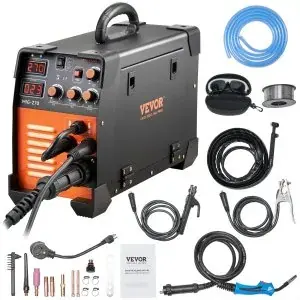
VEVOR's 270A three-in-one combines MIG, lift TIG and stick for buyers who expect thicker steel and longer work sessions. A larger output class can be useful, but it also asks for more stable storage, a suitable 240V circuit and a more deliberate consumables plan.
This is not an automatic upgrade from the 160A model. If the projects are still gates, carts and light repairs, the extra capacity may buy weight, controls and a circuit requirement that do not improve the first year of learning.
The AC/DC TIG is for a specific aluminum path
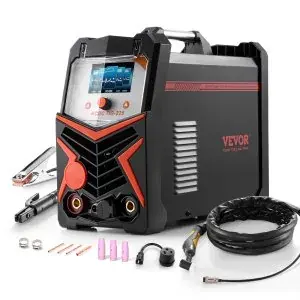
The 225A six-in-one AC/DC TIG is the specialist route. AC output is the relevant distinction when aluminum TIG is the reason you are buying a machine. The TIG route also needs a torch, tungsten, filler, shielding gas and more practice than a flux-core first bead.
Choose it when aluminum or TIG work is a real project goal. Do not choose it merely because it has the longest feature list. A beginner with a 120V steel-repair list will usually get more useful work from a simpler MIG or flux-core machine.